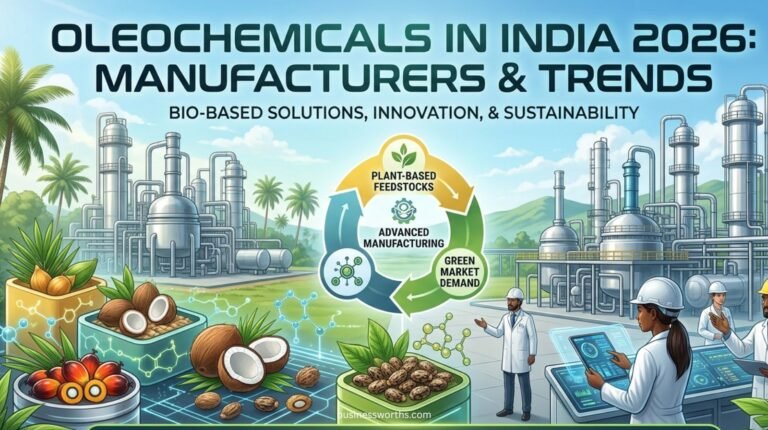



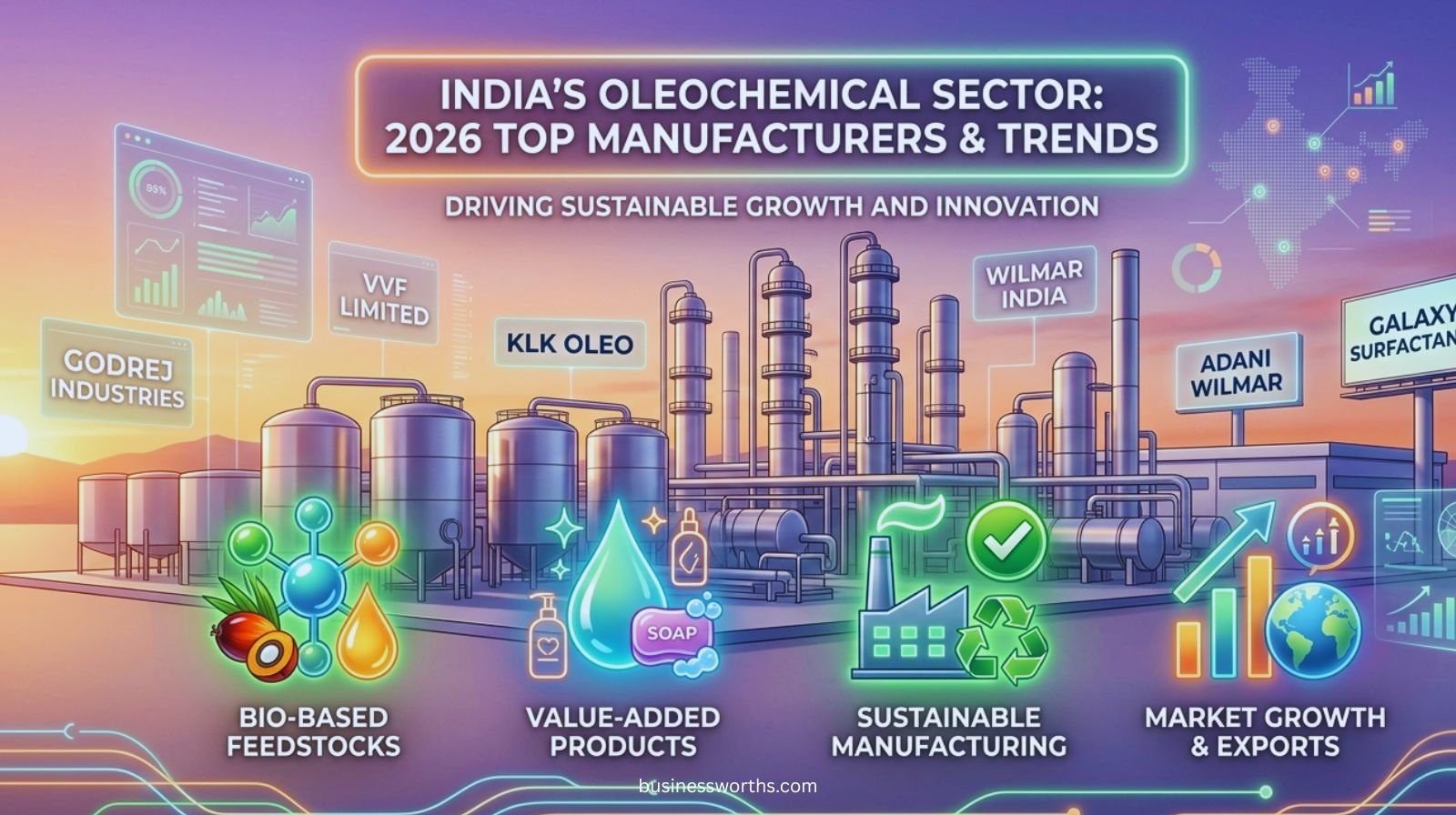
In the global shift toward sustainable chemistry, India has emerged as a powerhouse for bio-based industrial solutions. As of 2026, the demand for renewable alternatives to petrochemicals is at an all-time high, placing oleochemical companies in India at the center of a multi-billion dollar “Green Revolution.”
From the soap in your shower to the specialized lubricants in high-tech machinery, oleochemicals are the invisible backbone of modern life. This comprehensive guide explores the top players, emerging trends, and the strategic importance of the Indian oleochemical industry in 2026.
What are Oleochemicals? The Sustainable Core
Oleochemicals are chemical compounds derived from natural fats and oils, primarily sourced from plants (like palm and coconut) or animal fats. Unlike petrochemicals, they are biodegradable, non-toxic, and renewable.
- Primary Products: Fatty acids, fatty alcohols, glycerin, and methyl esters.
- Key Source: In India, Palm oil and CPKO (Crude Palm Kernel Oil) remain the dominant feedstocks, though Rice Bran Oil and Castor Oil derivatives are gaining massive traction for specialty applications.
Top 5 Oleochemical Companies in India (2026 Ranking)
The Indian market is define by a mix of diversified conglomerates and specialized “Pure Play” manufacturers. Here are the leaders dominating the landscape this year.
1. Godrej Industries Limited (Chemicals Division)
Godrej remains the undisputed leader in the Indian oleochemical sector. With massive production facilities in Valia (Gujarat) and Ambernath (Maharashtra), they cater to over 80 countries.
- Core Strength: They are world-class producers of fatty alcohols and fractionated fatty acids.
- 2026 Highlight: Godrej has significantly increased its capacity for RSPO-certified sustainable products to meet the stringent “Green Deal” requirements of the European market.
2. VVF (India) Limited
Headquartered in Mumbai, VVF is a global giant with a footprint across Asia, the Middle East, and North America.
- Core Strength: They are the largest contract manufacturer of bar soaps globally and a top-tier producer of distilled fatty acids.
- Why they lead: Their integration from oleochemicals to finished consumer goods gives them an unmatched cost advantage in the personal care industry.
3. Fine Organic Industries Limited
Fine Organics is the king of specialty oleochemical additives. Unlike bulk manufacturers, they focus on high-value derivatives used in niche sectors.
- Core Strength: They produce essential additives for polymers, food emulsifiers, and coatings.
- 2026 Trend: As India pushes for plastic recycling, Fine Organics’ bio-based processing aids have become mandatory for high-quality recycled resins.
4. Adani Wilmar Limited
Following its 2024 acquisition of Omkar Chemicals, Adani Wilmar has rapidly scaled its presence in the specialty oleochemicals space.
- Core Strength: Leveraging their massive edible oil supply chain to produce glycerin and stearic acid.
- Strategic Edge: Their “Port-to-Plant” model ensures they have the lowest logistics costs for imported palm feedstocks.
5. Fairchem Organics Limited
Fairchem is a pioneer in “Upcycling.” They specialize in processing the waste streams of vegetable oil refining into high-value chemicals.
- Core Strength: They are the leading Dimer Acid manufacturers in India, which is critical for the paints and ink industry.
- Sustainability Focus: Their entire business model is built on the principles of a circular economy.
Key Market Segments and Applications
The oleochemical market in India is segmented by the chemical complexity of the product and its final use.
| Product Category | Major Application | Key Indian Demand Driver |
| Fatty Acids | Soaps & Detergents | Rural penetration of premium home care brands. |
| Fatty Alcohols | Shampoos & Surfactants | The “Sulfate-Free” personal care movement. |
| Glycerin | Pharma & Oral Care | Expansion of the Generic Drug manufacturing hub. |
| Methyl Esters | Biodiesel & Solvents | Government mandates for 5% biodiesel blending. |
| Specialty Esters | Cosmetics & Lubricants | High-performance, skin-friendly “Clean Beauty” trends. |
2026 Industry Trends: What is Changing?
The landscape for oleochemical manufacturers in India is shifting due to global policy and local innovation.
- The Rise of Castor-Based Oleochemicals: India produces over 80% of the world’s castor oil. In 2026, companies like Jayant Agro-Organics are leading a shift toward Sebacic Acid and other castor derivatives for high-end biopolymers.
- Import Substitution: The Indian government has incentivized local production of Stearic Acid and Refined Glycerin to reduce reliance on Southeast Asian imports, strengthening the “Make in India” mission.
- Digital Supply Chains: Leading firms are now using Blockchain to track the “Forest-to-Factory” journey of their oils, ensuring no deforestation was involved—a key requirement for 2026 global trade.
- Enzymatic Processing: Innovative startups and established players are moving away from high-heat chemical reactions to enzymatic catalysis, which uses less energy and produces higher purity specialty esters.
Challenges Facing the Sector
While growth is robust, oleochemical companies in India must navigate specific hurdles:
- Feedstock Volatility: Since India imports a vast amount of palm oil, fluctuations in Indonesian and Malaysian export duties directly impact the price of fatty acids.
- Logistical Bottlenecks: Congestion at major ports like Kandla and Mundra can add significant “demurrage” costs to the final landed price of raw materials.
Frequently Asked Questions (FAQs)
1. Who is the largest manufacturer of fatty acids in India?
Godrej Industries and VVF (India) are the two largest producers, followed closely by Adani Wilmar in terms of overall volume.
2. Are oleochemicals better than petrochemicals?
Yes, in terms of sustainability. They are carbon-neutral (the plants absorb $CO_2$ during growth) and are much more easily broken down by the environment after use.
3. What is the role of glycerin in the oleochemical industry?
Glycerin is a major co-product. For every 10 tons of fatty acid produced, roughly 1 ton of crude glycerin is generated. It is highly valued in the pharmaceutical and food industries.
4. Where are most oleochemical plants located in India?
The majority are concentrated in Gujarat and Maharashtra due to the proximity to major seaports and the established chemical industrial corridors.
Conclusion: A Greener Future for Indian Industry
The story of oleochemical companies in India is one of resilience and transformation. As we navigate through 2026, these companies are no longer just suppliers; they are the architects of a sustainable future. By turning natural oils into high-performance chemicals, they are helping India meet its Net Zero goals while powering the daily needs of over a billion people.
Whether you are looking for bulk fatty acids or specialty esters, the Indian oleochemical market offers some of the most technologically advanced and sustainable solutions in the world today.