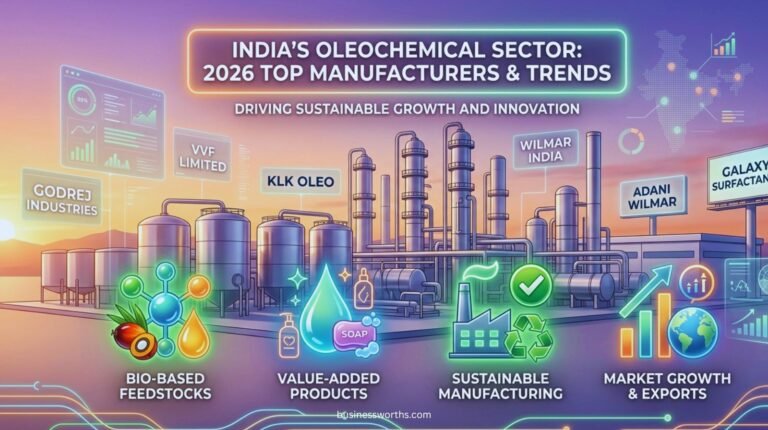



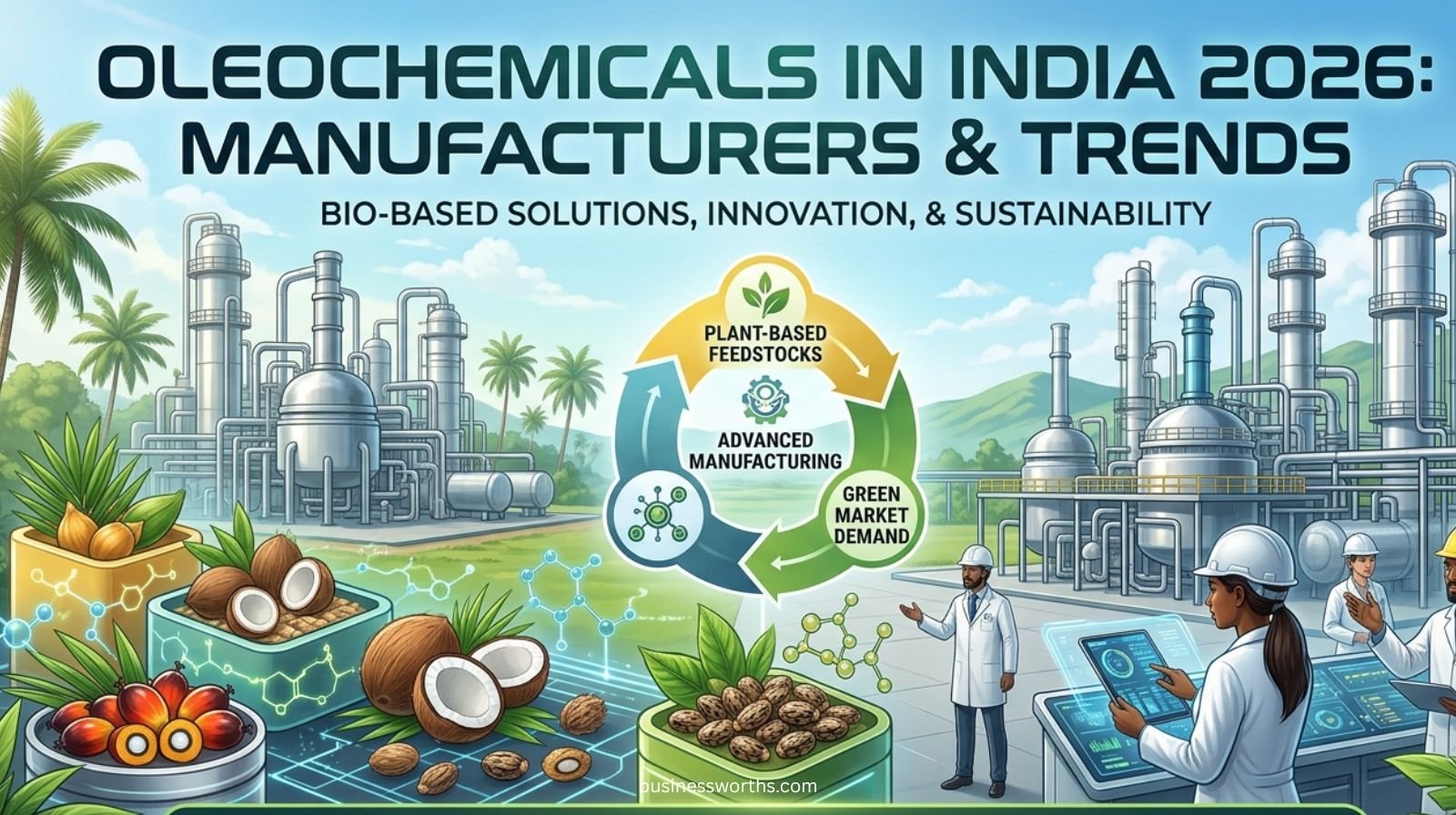
In the world of sustainable manufacturing, the spotlight has shifted firmly toward oleochemicals. Derived from natural fats and oils, these bio-based chemicals are the backbone of everything from your morning skincare routine to the high-performance lubricants in industrial machinery. As India accelerates its transition toward “Green Chemistry,” the role of oleochemical companies in India has become more pivotal than ever.
By 2026, the Indian oleochemical market has crossed the $1.2 billion mark, driven by a global push for biodegradable alternatives to petrochemicals. Whether you are an investor, a procurement specialist, or a student of industrial chemistry, understanding the powerhouses in this sector is essential. This guide explores the top oleochemical manufacturers, their key products, and the innovations shaping the industry this year.
What are Oleochemicals and Why Do They Matter?
Before diving into the companies, it is important to understand what makes these products special. Oleochemicals are chemicals derive from plant and animal fats. Unlike their petroleum-based counterparts, they are renewable, biodegradable, and non-toxic.
- Key Sources: Palm oil, coconut oil, soybean oil, sunflower oil, and tallow.
- Primary Products: Fatty acids, fatty alcohols, glycerin, and fatty amines.
- End-Use Industries: Personal care, soaps and detergents, food and beverages, pharmaceuticals, and lubricants.
Top Oleochemical Companies in India (2026 Ranking)
The Indian landscape is home to several global giants that have pioneered the production of high-quality fatty acids and derivatives. Here are the industry leaders dominating the market in 2026.
1. Godrej Industries Limited (Chemicals Division)
A household name in India, Godrej Industries is one of the oldest and largest oleochemical manufacturers in the country. They operate massive state-of-the-art plants in Valia (Gujarat) and Ambernath (Maharashtra).
- Product Specialty: They are market leaders in fatty alcohols, fatty acids, and glycerin.
- 2026 Focus: A heavy emphasis on RSPO-certified (sustainable) palm oil sourcing to meet European export standards.
2. VVF (India) Limited
Headquartered in Mumbai, VVF is a global powerhouse. They are not only a top producer of oleochemicals but also the world’s largest contract manufacturer of bar soaps.
- Operational Scale: Their Taloja facility is the single largest fatty alcohol manufacturing plant in Asia.
- Key Export: VVF is recognized as India’s outstanding exporter of specialty fatty acids such as Behenic and Erucic acids.
3. Fine Organic Industries Limited
If you are looking for “Green Chemistry” pioneers, Fine Organics is the leader. They specialize in oleochemical-based additives that replace harmful synthetic chemicals.
- Diversified Portfolio: Their products are essential in food emulsifiers, polymer additives, and coatings.
- Global Expansion: In 2026, the company has successfully operationalized new facilities in Thailand and the USA (South Carolina) to serve international markets directly.
4. Fairchem Organics Limited
Based in Ahmedabad, Fairchem is a niche leader focusing on high-value products derived from vegetable oil by-product streams (like soya and sunflower).
- Hero Products: They are the go-to Dimer Acid manufacturers in India and are world-renowned for their Linoleic Acid production.
- Sustainability Edge: Their model is built on upcycling by-products into high-performance chemicals for the paint and ink industries.
5. Privi Speciality Chemicals Limited
While primarily known for aroma chemicals, Privi has a robust oleochemical vertical. In 2026, they are undergoing a massive 3-phase expansion to boost their overall capacity by 55%.
- Innovation: They are heavily investing in biotechnology to create next-generation “bio-specialty” molecules.
- Strategic Growth: Their long-term vision targets a revenue of ₹5,000 crore by the end of the decade.
Comparison of Key Product Segments in 2026
The market is segment by the chemical structure and the application of the products. Here is a snapshot of where the demand lies.
| Product Type | Top Manufacturer | Primary Application |
| Fatty Alcohols | VVF (India) Ltd | Surfactants, shampoos, and lotions. |
| Fatty Acids | Godrej Industries | Soaps, detergents, and rubber processing. |
| Specialty Esters | Fine Organic Industries | Food additives and plasticizers. |
| Glycerin | India Glycols Ltd | Pharmaceuticals and cosmetics. |
| Dimer Acid | Fairchem Organics | High-performance coatings and inks. |
Major Industry Trends Shaping 2026
The oleochemical industry in India is no longer just about bulk production; it is about high-tech, sustainable solutions.
- Biodiesel Mandates: The Indian government’s push for ethanol and biodiesel blending has skyrocketed the demand for fatty acid methyl esters (FAME).
- Clean Label Cosmetics: Consumers are demanding “paraben-free” and “natural” products, forcing personal care brands to replace synthetic silicones with oleochemical emollients.
- Supply Chain Traceability: With the EU’s strict deforestation regulations, Indian companies are adopting blockchain-based tracking to prove their raw materials are sustainably sourced.
- Energy Efficiency: Next-generation data centers are now using oleochemical-based cooling fluids, which are more energy-efficient and biodegradable than mineral oils.
Challenges for Oleochemical Companies
Despite the growth, the sector faces significant hurdles in 2026:
- Feedstock Volatility: Since these chemicals depend on vegetable oils, fluctuations in palm oil prices directly impact the margins of companies like Fine Organics.
- Import Competition: Indian manufacturers are advocating for higher duties on finished imports (like stearic acid) to protect the domestic “Make in India” ecosystem.
FAQs: Navigating the Oleochemical Market
1. Which is the largest oleochemical company in India?
In terms of diverse portfolio and domestic presence, Godrej Industries leads the way, while VVF (India) holds a dominant position in global exports and fatty alcohol capacity.
2. Are oleochemicals eco-friendly?
Yes, they are derived from renewable natural resources and are far more biodegradable than petrochemical-based alternatives, making them a cornerstone of sustainable manufacturing.
3. What is the role of glycerin in this industry?
Glycerin is a major by-product of the oleochemical process. It is a high-value chemical used extensively in the pharmaceutical and food industries as a humectant and sweetener.
4. Where are the major oleochemical hubs in India?
Most manufacturing is concentrated in Gujarat (Sanand, Valia, Ahmedabad) and Maharashtra (Mumbai, Taloja, Ambernath) due to proximity to ports and raw material supply chains.
Conclusion: The Future is Bio-Based
The rise of oleochemical companies in India is a testament to the country’s growing strength in specialty chemicals. As we move further into 2026, the focus will shift from “bulk” to “bio-specialty.” Companies that invest in R&D and sustainable feedstock sourcing will not only dominate the Indian market but also lead the global transition away from fossil-fuel-based chemistry.